Nexus
 Figma
Figma
Project Overview
Nexus is a UX/UI design project that explores how science fiction communities engage, collaborate, and share ideas online. Informed by platform analysis and speculative design, the project addresses the fragmented experiences found across platforms such as Reddit, X, and Instagram. Nexus introduces features like The Lab, a concept driven filtering system, and Nex, an AI assisted discovery tool designed to support intentional exploration and creative collaboration. The interface combines retro futuristic aesthetics with compact, functional layouts to balance inspiration and usability. Developed through iterative prototyping and analysis of digital community behavior, Nexus demonstrates how thoughtful UX design can transform niche interest spaces into structured, collaborative ecosystems.
Context & Opportunity
Science fiction communities are highly active online, but their experiences are fragmented across multiple platforms. Fans and creators often move between spaces such as Reddit, X, and Instagram to consume content, share ideas, and collaborate. While each platform offers value, none are designed specifically to support deep sci fi exploration, long term creativity, or meaningful collaboration. Existing platforms prioritize fast paced feeds, trends, and engagement metrics, which can make it difficult for users to intentionally discover content, organize inspiration, or build upon ideas over time. Creative collaboration tools are either limited, buried within broader platforms, or not tailored to the speculative and world building nature of science fiction. This fragmentation presents an opportunity to design a platform purpose built for sci fi communities. One that supports structured discovery, creative exploration, and collaboration in a single environment. Nexus was conceived to address this gap by rethinking how niche interest groups interact online and by creating tools that prioritize creativity, context, and connection over endless scrolling.
Goals & Design Principles
The goal of Nexus was to create a platform that supports intentional discovery, creative exploration, and meaningful collaboration within science fiction communities. Rather than optimizing for engagement metrics or endless scrolling, the design prioritizes structure, context, and long term creative value.
Nexus was guided by the following design principles.
- The platform should support purposeful discovery. Users should be able to explore sci fi content based on concepts, themes, and ideas rather than relying on algorithm driven feeds.
- The experience should encourage creativity and collaboration. Nexus is designed to help users build upon ideas, share inspiration, and co create projects instead of consuming content passively.
- Tools should be genre aware and context driven. Features such as filtering and AI assistance are designed specifically for sci fi storytelling, world building, and speculative thinking.
- The interface should balance inspiration with usability. Visual design draws from retro futuristic aesthetics while maintaining compact, functional layouts that support clarity and focus.
- The platform should feel structured but flexible. Users should be able to explore deeply without feeling overwhelmed, allowing both casual browsing and focused creative work.
Platform Analysis & Insights
Research for Nexus focused on analyzing how existing platforms support science fiction discovery, discussion, and creative collaboration. A comparative review of platforms such as Reddit, X, and Instagram was conducted to understand their strengths, limitations, and patterns of use within sci fi communities.
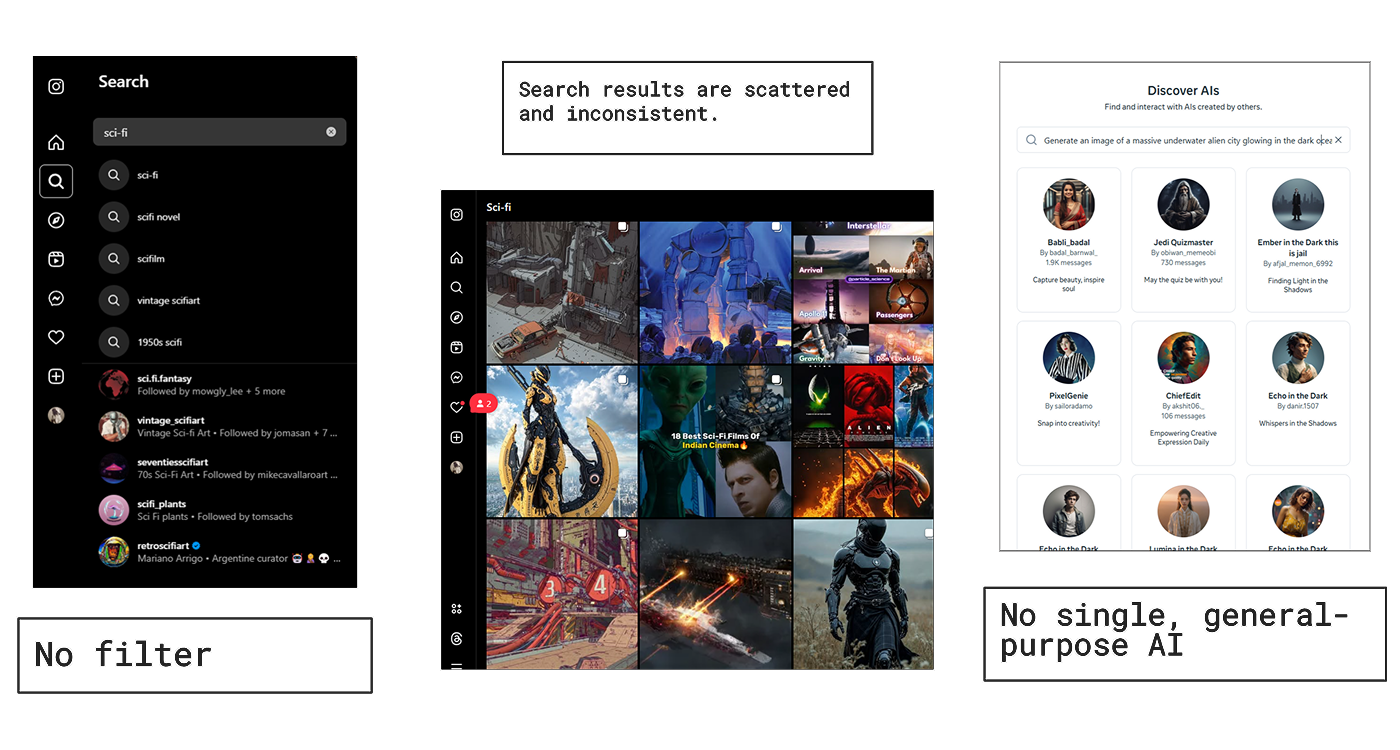
This analysis revealed that users often rely on multiple platforms to meet different needs. Some platforms support quick visual inspiration, while others enable longer discussions or theory development. However, content across these spaces is highly fragmented, making it difficult to organize ideas or return to meaningful inspiration over time.
X
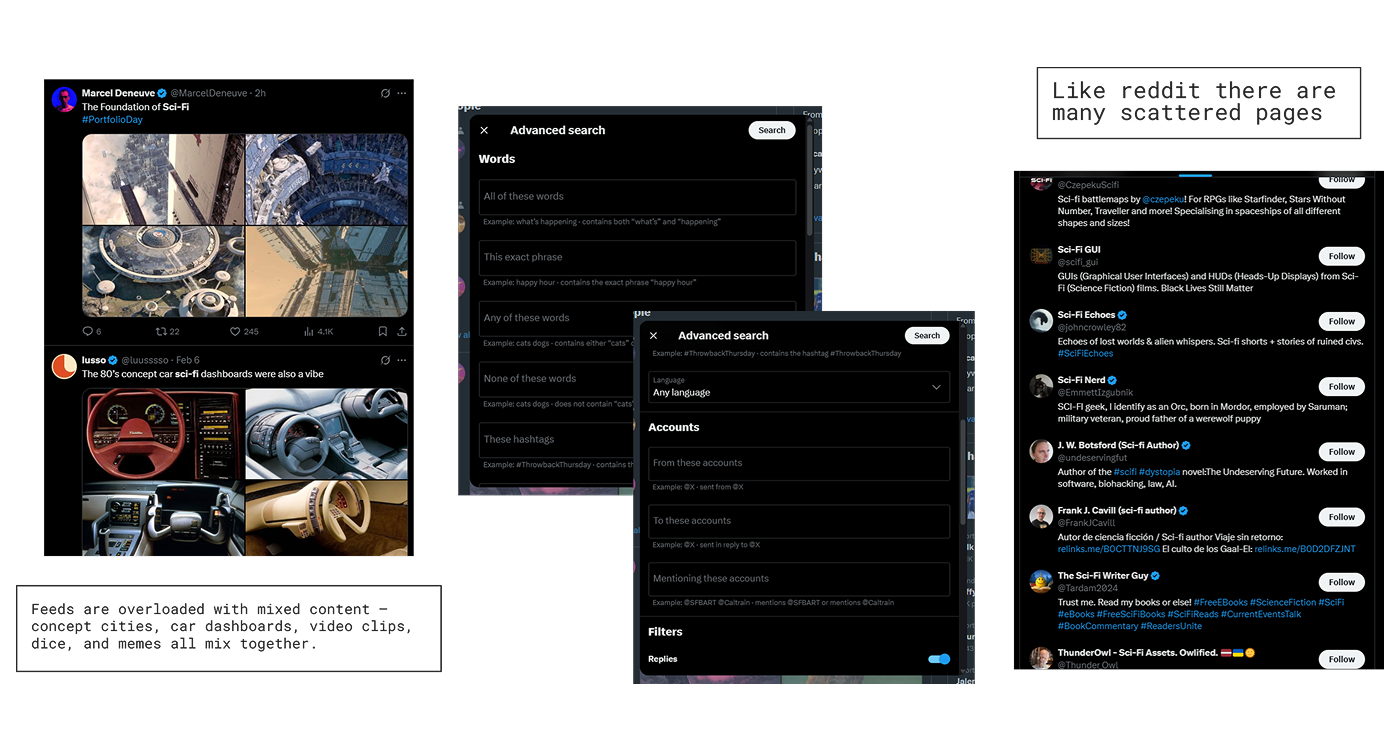
Unstructured feeds and algorithm driven discovery were common limitations across platforms. Content is frequently mixed without clear context, which limits intentional exploration of specific sci fi themes or concepts. Creative tools, when available, are often general purpose and not tailored to speculative storytelling or world building.
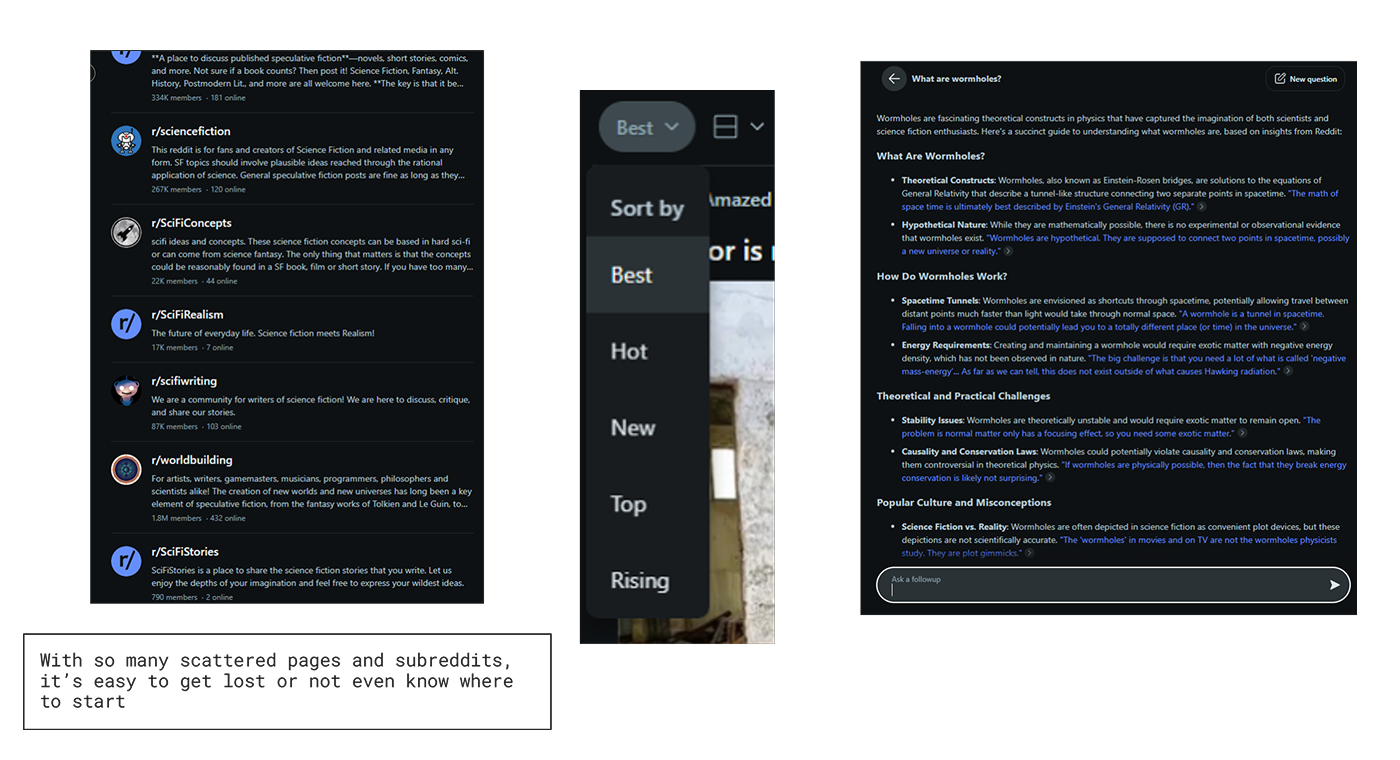
These observations highlighted a gap for a platform that combines structured discovery with creative support tools. Insights from this analysis directly informed the design of Nexus, including its emphasis on concept driven filtering, genre aware AI assistance, and a more intentional approach to exploration and collaboration.
Core Systems & Features
The design of Nexus is centered around two core systems that directly respond to the challenges identified through platform analysis. These systems were created to support intentional discovery, creative exploration, and collaboration within science fiction communities.
The Lab
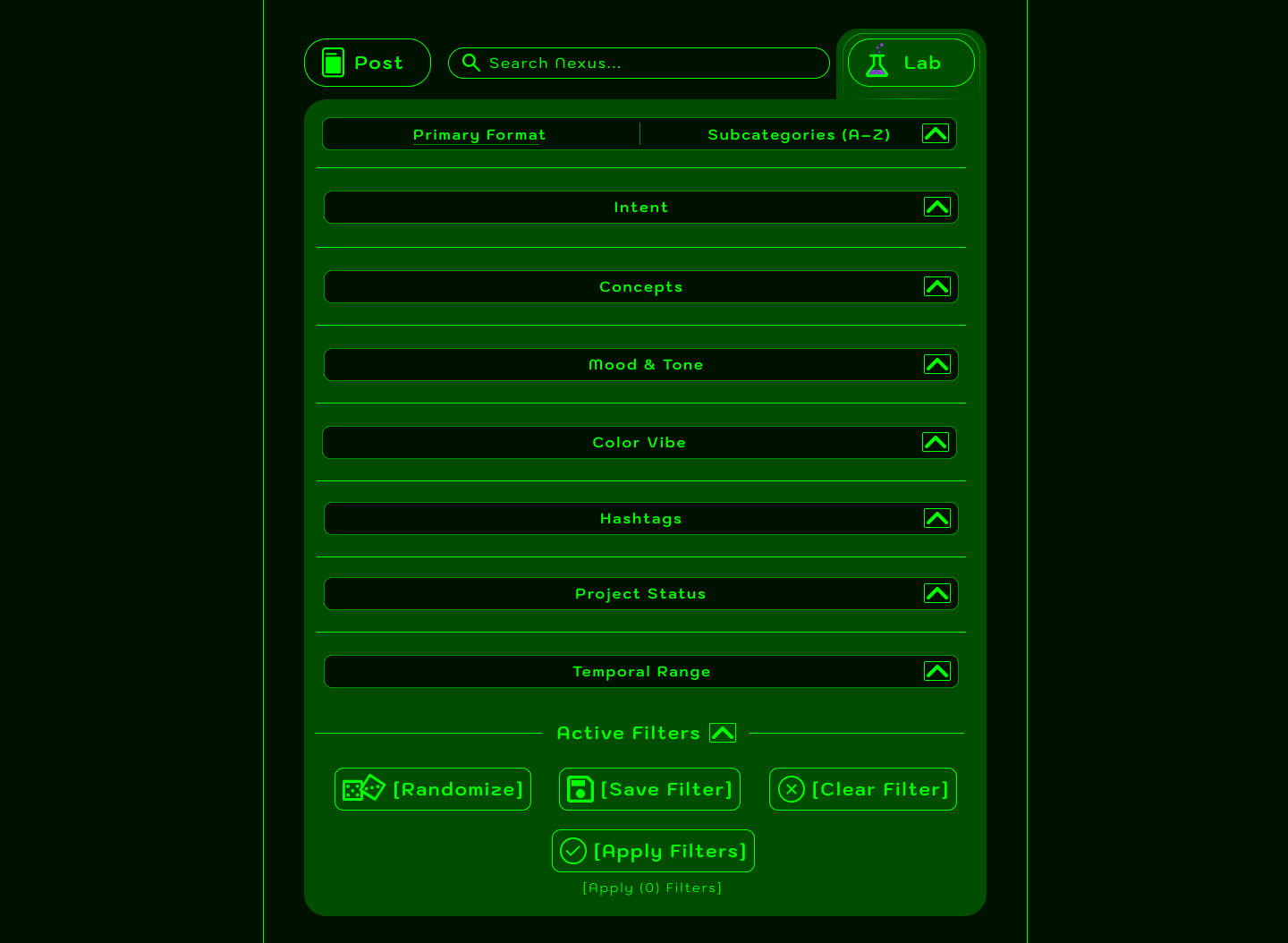
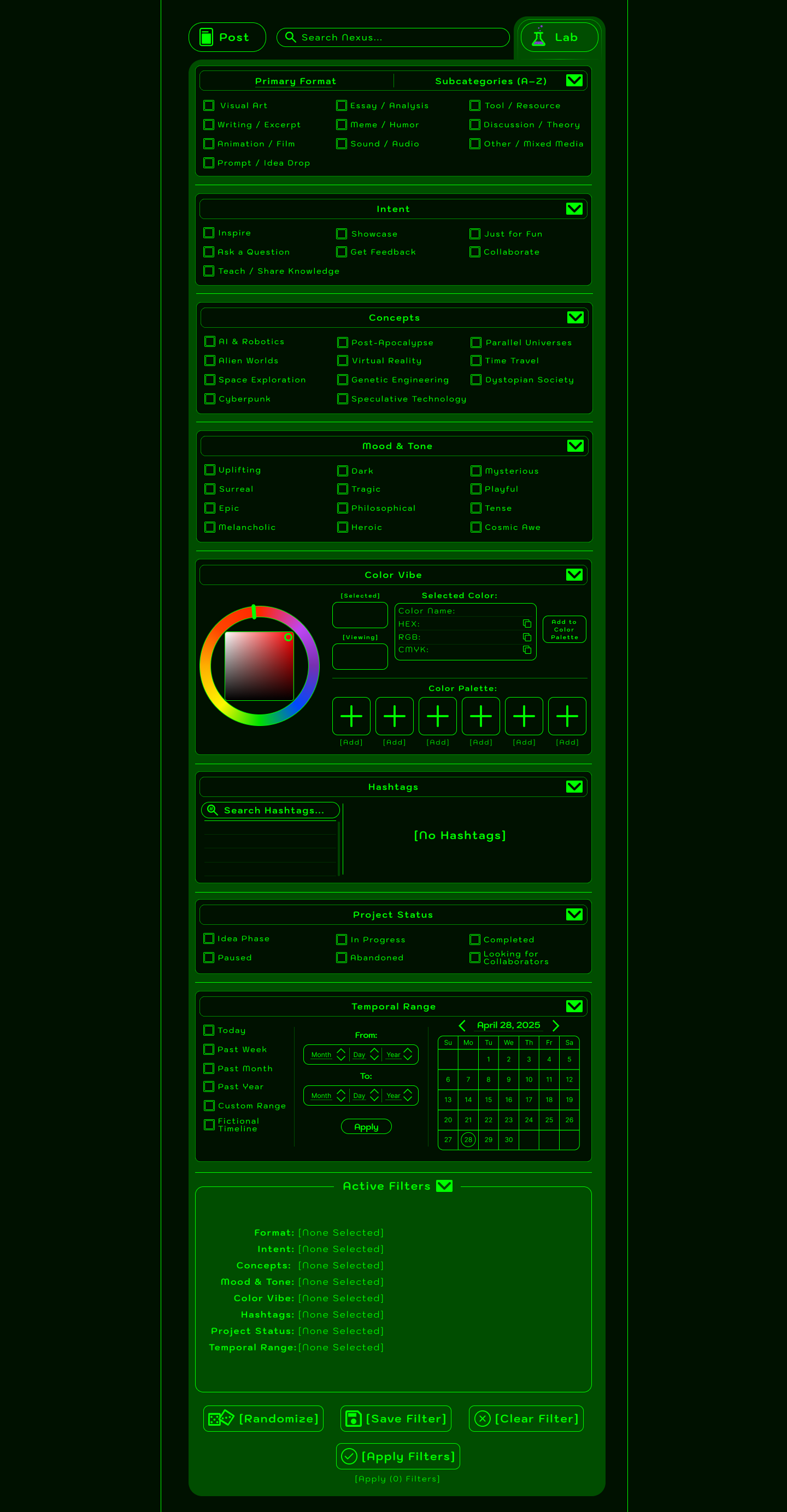
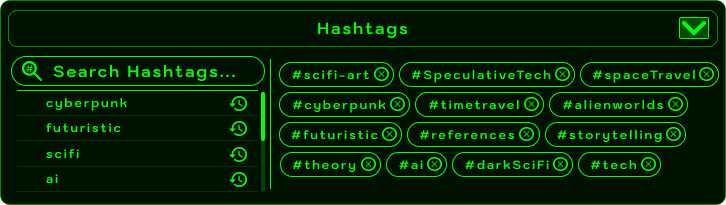
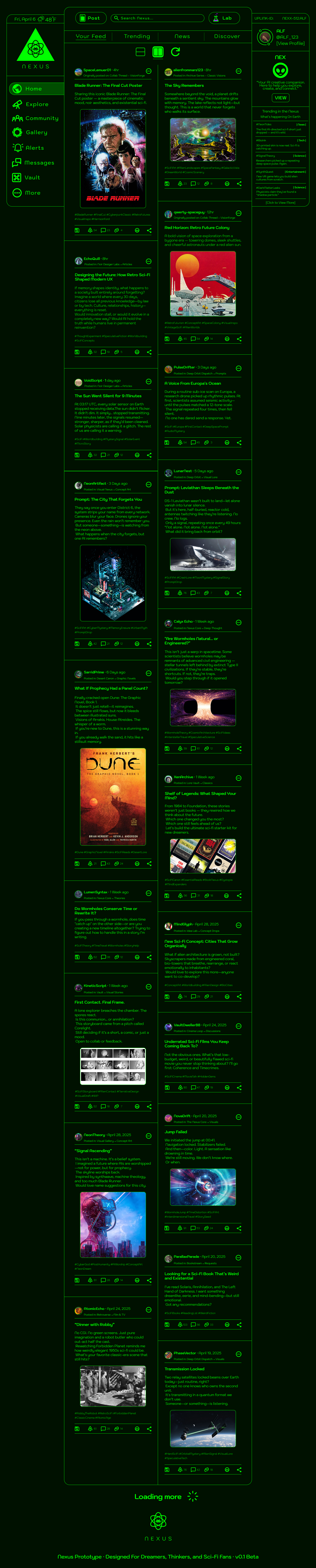
The Lab is a concept driven filtering and exploration system designed to help users navigate sci fi content with purpose. Instead of relying on infinite scrolling or popularity based feeds, The Lab allows users to explore ideas through themes, concepts, tones, and speculative questions. This system encourages deeper engagement by helping users discover content based on what they are thinking about or trying to create, rather than what is trending. By structuring discovery around concepts instead of posts, The Lab supports world building, theory exploration, and long term creative thinking.
Nex
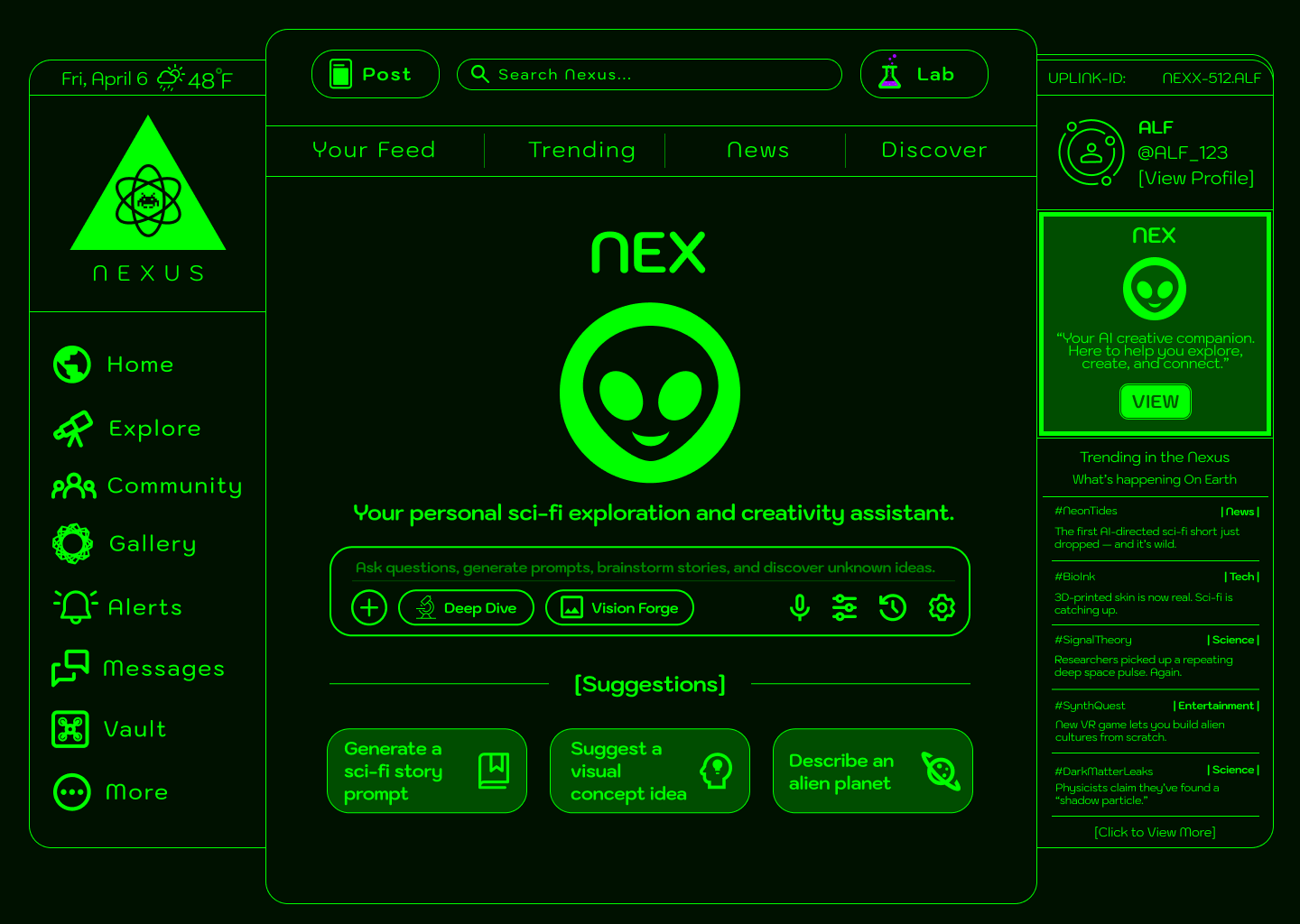
Nex is an AI assisted discovery and creativity tool designed specifically for science fiction exploration. Rather than functioning as a general purpose chatbot, Nex is positioned as a creative companion that supports idea generation, summarization, and speculative thinking. Nex helps users ask questions, explore theories, and generate inspiration within a sci fi context. Its role is to support creativity and discovery while remaining integrated into the broader Nexus experience, rather than acting as a separate or disruptive feature.
Together, The Lab and Nex form the foundation of Nexus as a structured, genre aware platform. These systems work in tandem to shift the experience away from passive content consumption and toward intentional exploration, collaboration, and creative growth.
Information Architecture
The information architecture for Nexus was designed to support structured discovery, creative exploration, and collaboration without overwhelming users. The platform is organized around clear content groupings that reflect how sci fi fans explore ideas, develop concepts, and engage with creative communities.
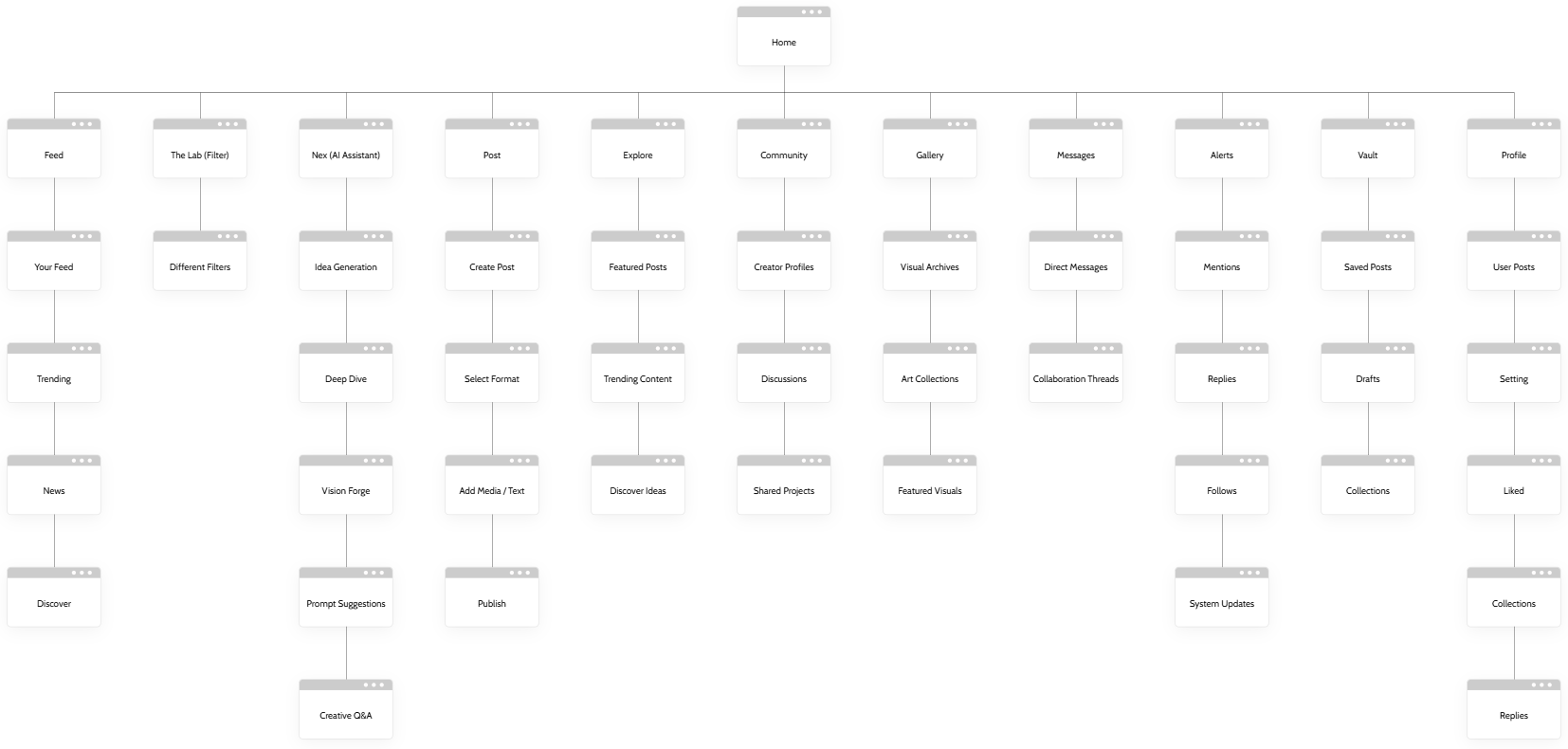
At the highest level, Nexus is structured around exploration, creation, and connection. Core navigation provides access to discovery tools, community content, AI assisted exploration, and personal workspace features. This structure allows users to move fluidly between browsing inspiration, developing ideas, and engaging with others. Discovery is organized through The Lab system, which acts as the primary entry point for exploring content. Rather than relying on a single feed, content is grouped by concepts, themes, and speculative categories. This structure supports intentional exploration and helps users navigate large amounts of content without losing context. Creative and collaborative spaces are organized separately from discovery to reduce noise and cognitive load. User profiles, saved ideas, and ongoing projects are grouped within personal and community focused sections, allowing users to return to ideas over time and build upon previous work. AI assisted exploration through Nex is integrated as a supporting layer rather than a standalone destination. This allows users to access creative assistance contextually while exploring content or developing ideas, reinforcing Nexus’s goal of supporting creativity without disrupting flow. Overall, the information architecture prioritizes clarity, hierarchy, and flexibility. By structuring the platform around concepts instead of posts, Nexus enables deeper engagement and supports long term creative exploration within sci fi communities.
Design Exploration & Prototyping
Nexus was developed through direct design exploration in a high fidelity prototype rather than through traditional low fidelity wireframes. This approach supported the project’s exploratory and speculative nature, allowing structure, interaction, and visual design to evolve together. Design decisions were iterated within the prototype itself, with layouts, navigation patterns, and system placement refined over time. Working directly in high fidelity made it easier to explore how discovery tools, creative spaces, and AI assisted features could coexist within a single interface. Prototyping allowed for rapid experimentation with layout density, content grouping, and visual hierarchy. This process helped balance retro futuristic aesthetics with functional clarity, ensuring that the interface remained usable despite the complexity of the content. By designing directly in prototype, Nexus was able to evolve organically, with each iteration informing the next and reinforcing the platform’s focus on intentional exploration and creative collaboration. A short prototype walkthrough was created to explore navigation, system placement, and interaction concepts within Nexus.
Visual Design
The visual design of Nexus was created to support focus, clarity, and immersion within a dense and idea driven platform. Rather than prioritizing decorative elements, the interface emphasizes structure, readability, and intentional use of visual hierarchy to support exploration and creative work. A retro futuristic visual language was chosen to reflect the speculative nature of science fiction while maintaining a functional and modern feel. Compact layouts and controlled spacing allow large amounts of content to be presented without overwhelming users, supporting both casual browsing and deeper exploration.

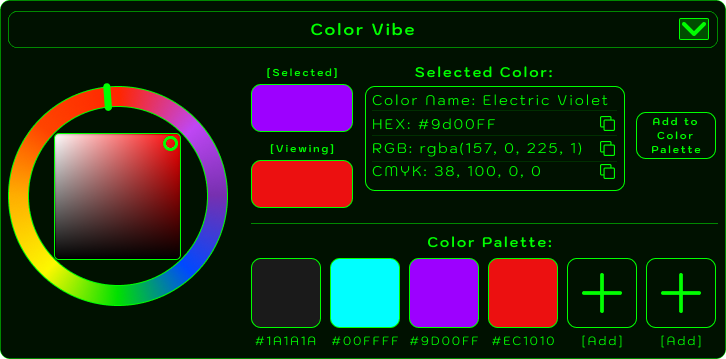
Color is used selectively to establish hierarchy and guide attention across the interface. Primary interface elements, navigation, and system tools are visually distinct from content areas, helping users understand where to explore, create, and interact. This approach reinforces clarity while allowing creative content to remain the focal point. Typography choices prioritize legibility and consistency across dense information spaces. Clear distinctions between headings, supporting text, and metadata help users scan content efficiently and orient themselves within complex views.
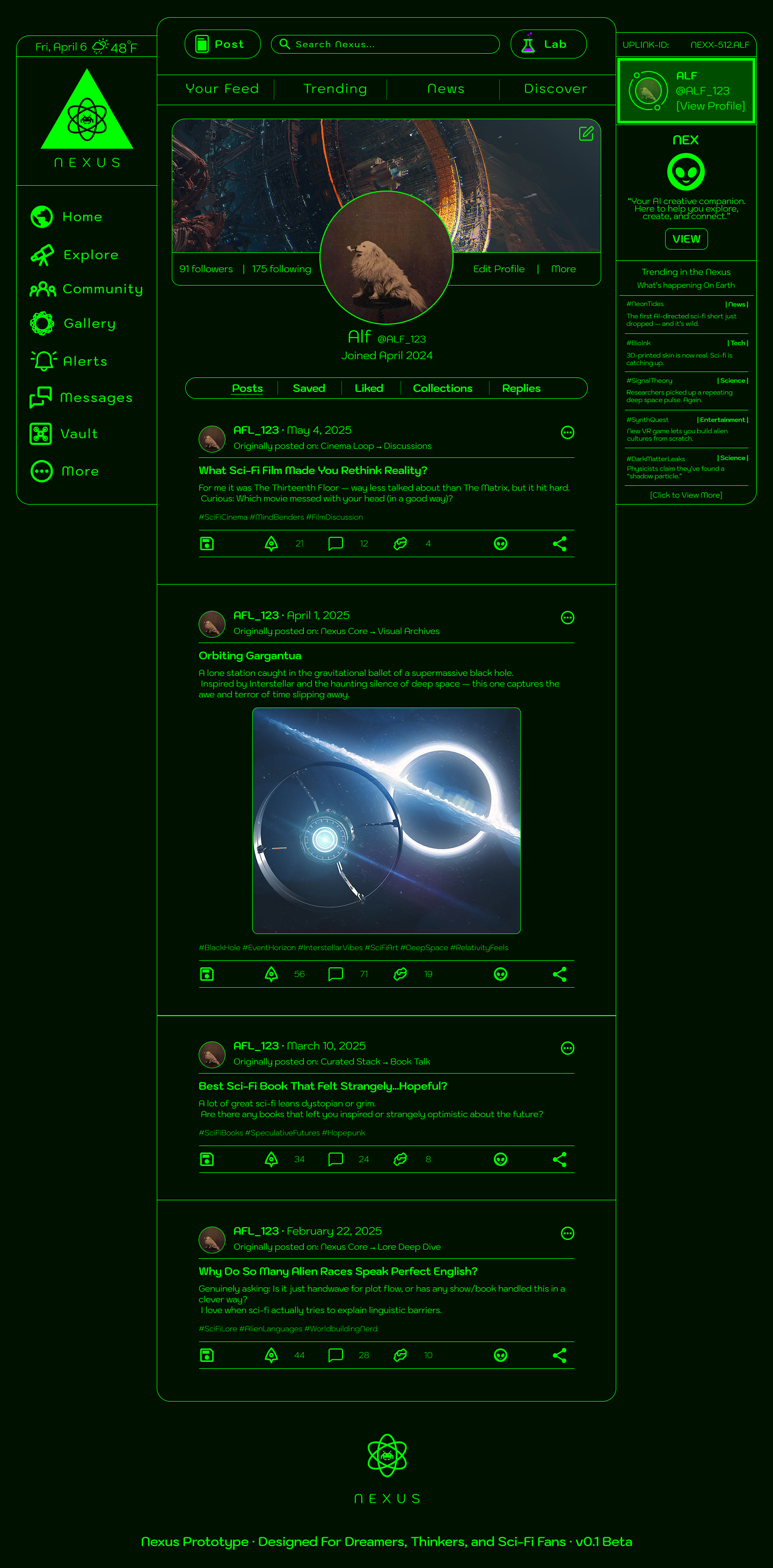
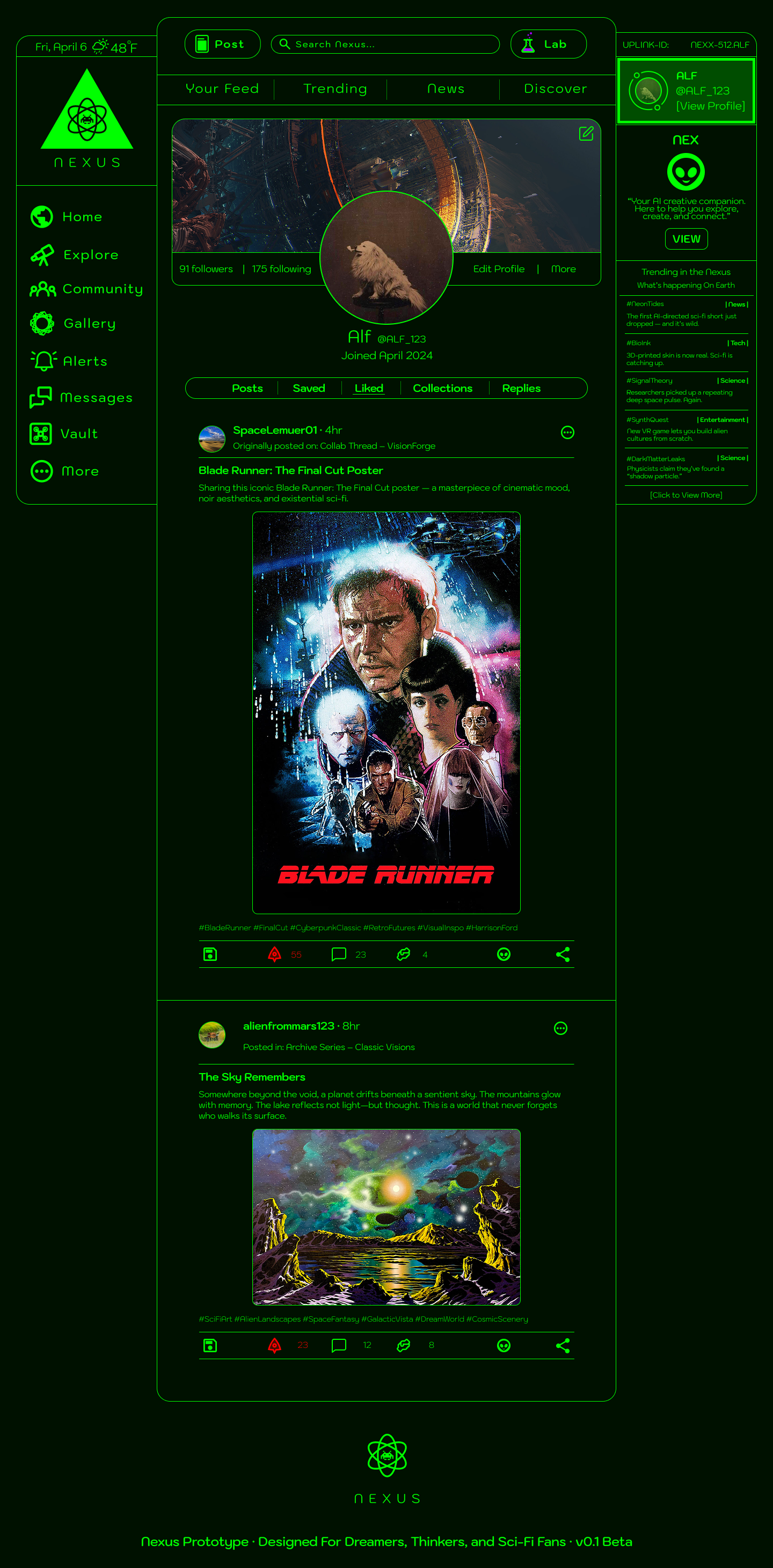
Across screens, visual consistency reinforces familiarity and reduces cognitive load. Reusable components, aligned grids, and predictable layout patterns help users move fluidly between discovery tools, creative spaces, and personal content without needing to relearn the interface. Overall, the visual design balances atmosphere with usability, supporting Nexus’s goal of intentional discovery and creative collaboration while maintaining a clear and structured user experience.
Evaluation & Next Steps
Nexus was evaluated through iterative design review and ongoing reflection against its core goals and design principles. Without formal usability testing, design decisions were assessed based on clarity, consistency, and how effectively the interface supported intentional discovery and creative exploration. If the project were to continue, usability testing would be conducted to better understand how users navigate The Lab system, engage with Nex, and move between discovery, creation, and collaboration. These sessions would focus on evaluating navigation clarity, content organization, and the effectiveness of concept driven filtering.
Future iterations of Nexus would include completing a fully clickable prototype to validate interaction patterns and user flows. Additional development would focus on refining The Lab’s filtering logic, improving Nex’s integration within creative workflows, and expanding personalization features such as saved ideas and ongoing projects. Further exploration could also include testing Nexus with different types of sci fi users, including artists, writers, and casual fans, to ensure the platform supports a range of creative behaviors while maintaining structure and usability.
Reflection & Learnings
Designing Nexus deepened my understanding of how digital platforms shape creative communities and influence how ideas are discovered, organized, and developed over time. Working on a speculative, system driven project pushed me to think beyond individual screens and focus on how structure, tools, and interaction patterns guide user behavior. One of the most valuable learnings from this project was the importance of designing systems rather than isolated features. Developing The Lab and Nex required careful consideration of how discovery, creativity, and collaboration intersect within a single experience, reinforcing the role of information architecture and intentional structure in complex platforms. This project also highlighted the value of direct design exploration through high fidelity prototyping. Iterating within the prototype allowed ideas to evolve organically and revealed how visual design, layout density, and system placement impact usability and focus. If revisiting Nexus, I would prioritize usability testing earlier in the process to validate assumptions and refine interaction patterns. This experience reinforced the importance of iteration, evaluation, and flexibility when designing for niche communities and speculative use cases. Overall, Nexus strengthened my approach to UX and product design by emphasizing strategic thinking, system level design, and the balance between inspiration and usability.
Other Web Development Projects
- CUNY Design
- Star Wars: Andor
- The Gallery
- The Silent Sufferers
- AI Reckoning
- BlueWave Eco
- PrivacyGuard